Myanmar Child labour 2013: Kids making roads in Myanmar Burma
26.10.2013 21:12(Päivitetty: 30.10.2013 03:03)
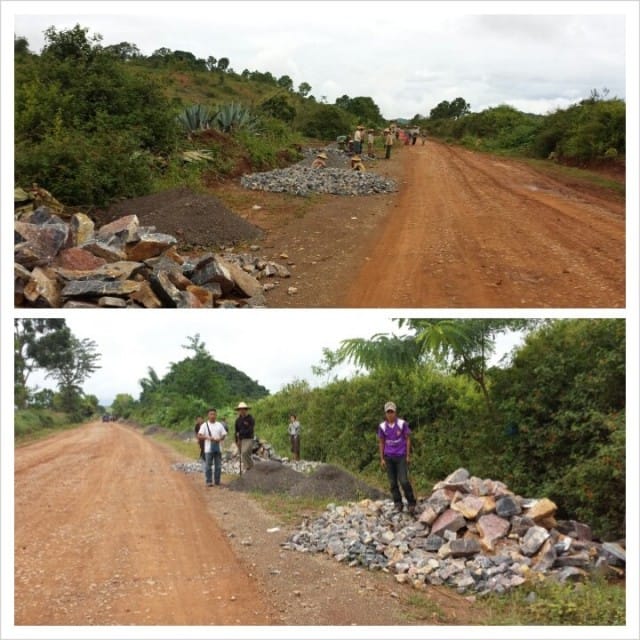
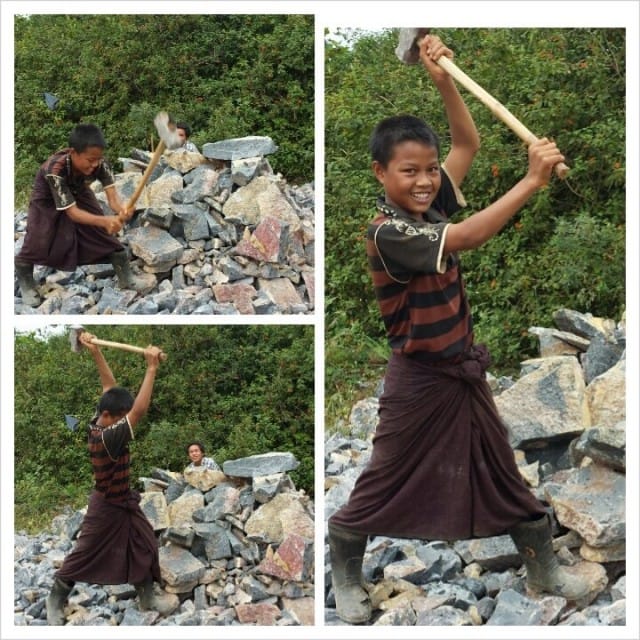
Roads in Myanmar are hand made. Boys are crashing bigger rocks to small pieces. Women set small rocks one by one to base of the road.
Hard work. Quess how old is this happy hard working boy?
Situation analysis:
– https://www.google.com/url?sa=t&source=web&cd=3&ved=0CDkQFjAC&url=http%3A%2F%2Fwww.unicef.org%2Feapro%2FMyanmar_Situation_Analysis.pdf&ei=59xrUtH2GajtiAfmxYGwBw&usg=AFQjCNHuZU7mFjaSEd2lwWA6RzU5bglpSA
Burma to sign convention:
– http://www.irrawaddy.org/ilo/burma-sign-convention-child-labor.html
“Child labor starts when families can’t get enough food. Children are supposed to study, but they cannot go to school because they need to work to help their families.”
In Burma, it is illegal to employ children less than 15 of age, and according to the colonial-era Factory Act, employees from 15 to 18 years old can work no more than four hours a day. However, few underage workers benefit from protections stipulated in the legislation, and youth laborers are routinely forced to work more than the statutorily mandated limit.
Thet Thet Aung says that according to the 1951 labor law, children between the ages of 13 and 15 can also legally work for eight hours daily after receiving a doctor’s note saying they are in good health.“I think 13 years old is too young,” she said. “Let’s set a limit of four hours of working a day for them. The rest of the time, give an education to those who are interested in studying, or let them learn technical skills so they can advance their future careers.”
Ilkka O. Lavas
Serial entrepreneur